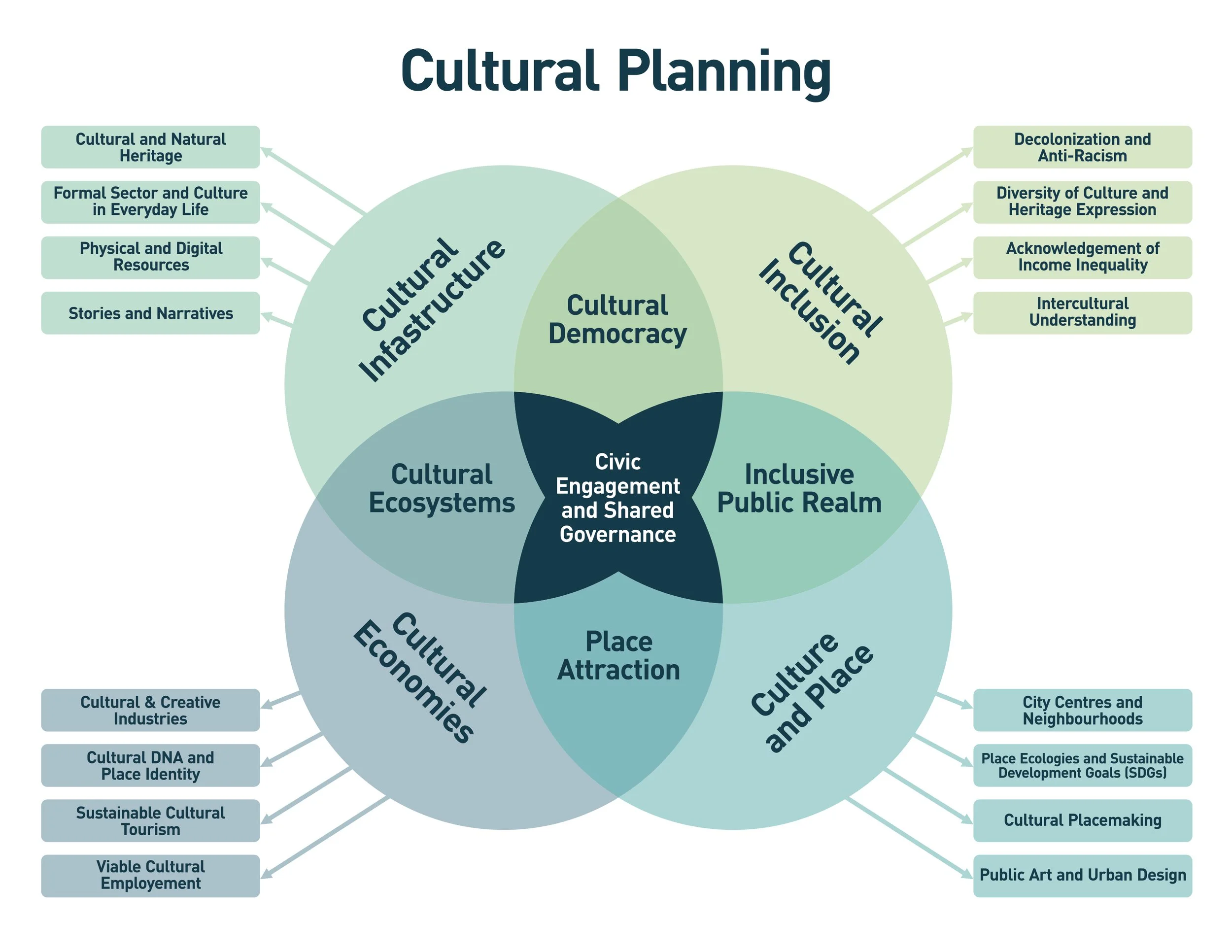
What is Cultural Planning?
Cultural planning takes as its point of departure there is no sustainable cultural sector in Canada that depends on senior levels of government and their funding councils.
Culture must be built into how we think about cities and city-building, but we must move past advocacy to embrace concrete methodologies to embed culture in municipal planning systems and social and economic development strategies.
Then, the question is: what do we mean by culture?
Cultural planning asks us to stop thinking about the categories of culture governments tell us to think about – arts, heritage, creative industries. Instead, it embraces the language of cultural resources or assets. This is first an unapologetic rejection of ‘arts for arts’ sake’ that understands culture as a powerful resource not just for economic but for social, civic as well as other ‘public good’ outcomes.
Jane Jacobs famously taught us nations don't generate wealth; cities and regions is where wealth comes from. Culture is central to the quality of life and quality of place in communities. We used to think if we attracted businesses, people would follow. Instead, if we know if we build places where people want to live and work, business and investment follow people not the other way around.
Cultural resources are central to people experiencing rich cultural lives – lives beginning with authentic urban environments that preserve natural and cultural heritage. They are vibrant communities with rich arts and entertainment assets. These include things like music, food, festivals, and language, but also less visible elements such as shared memories, values, local histories, everyday habits, who feels included, and who doesn’t.
Culture + Place = Wealth Creation
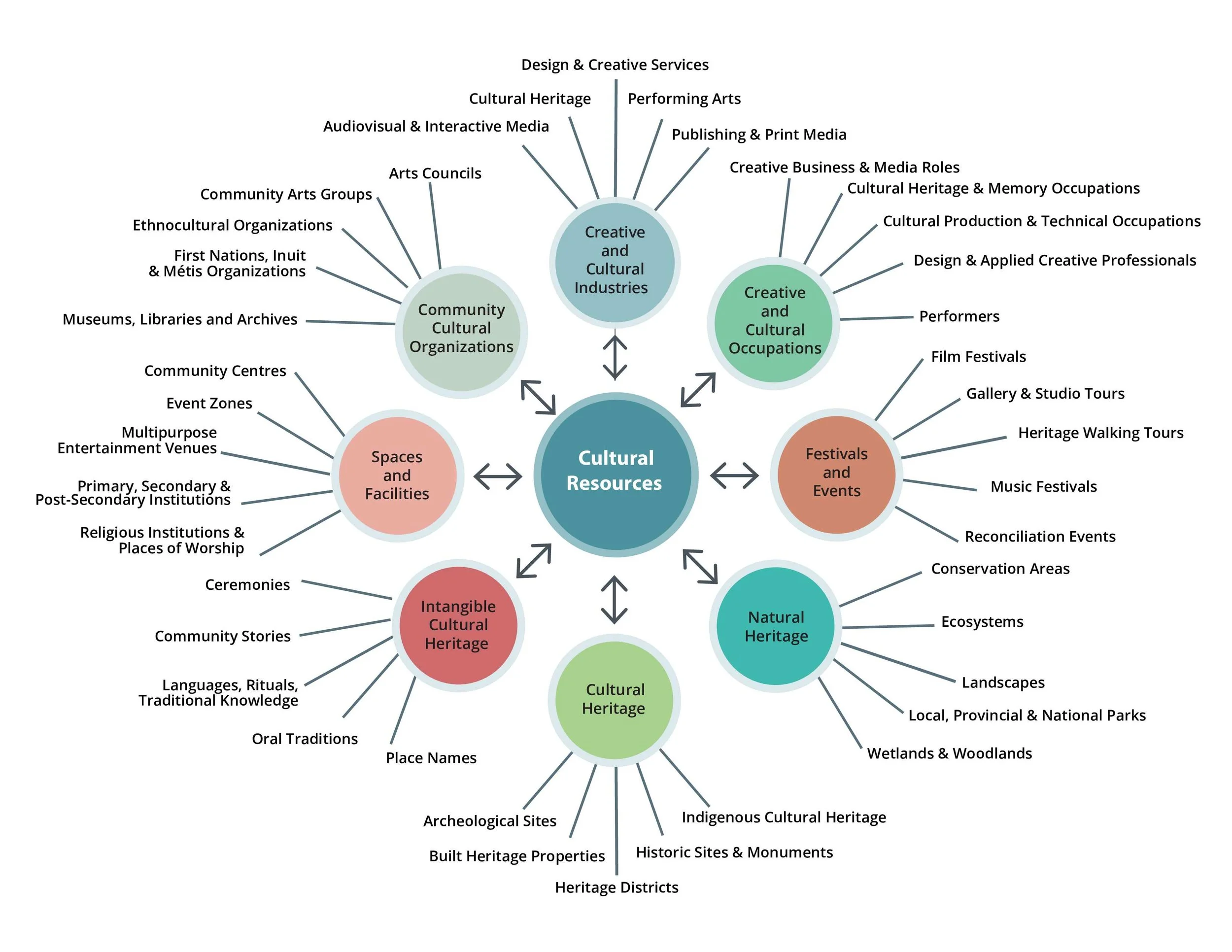
This diagram illustrates the Cultural Resource Framework (CRF) that was supported by the Municipal Cultural Planning Partnership, a powerful and informal alliance of more than 25 major public, private and voluntary agencies in the early 2000s. The CRF was formally endorsed by the Provinces of Ontario and Nova Scotia and supported municipal cultural plans established in more than 80 municipalities in Canada and the United States between 2000 and 2017.
When we think about cultural resources like this, culture becomes a strategic tool: a well-designed public space, a transit system, a housing policy, an economic development strategy can all be more successful if they align with how people live, identify, and connect.
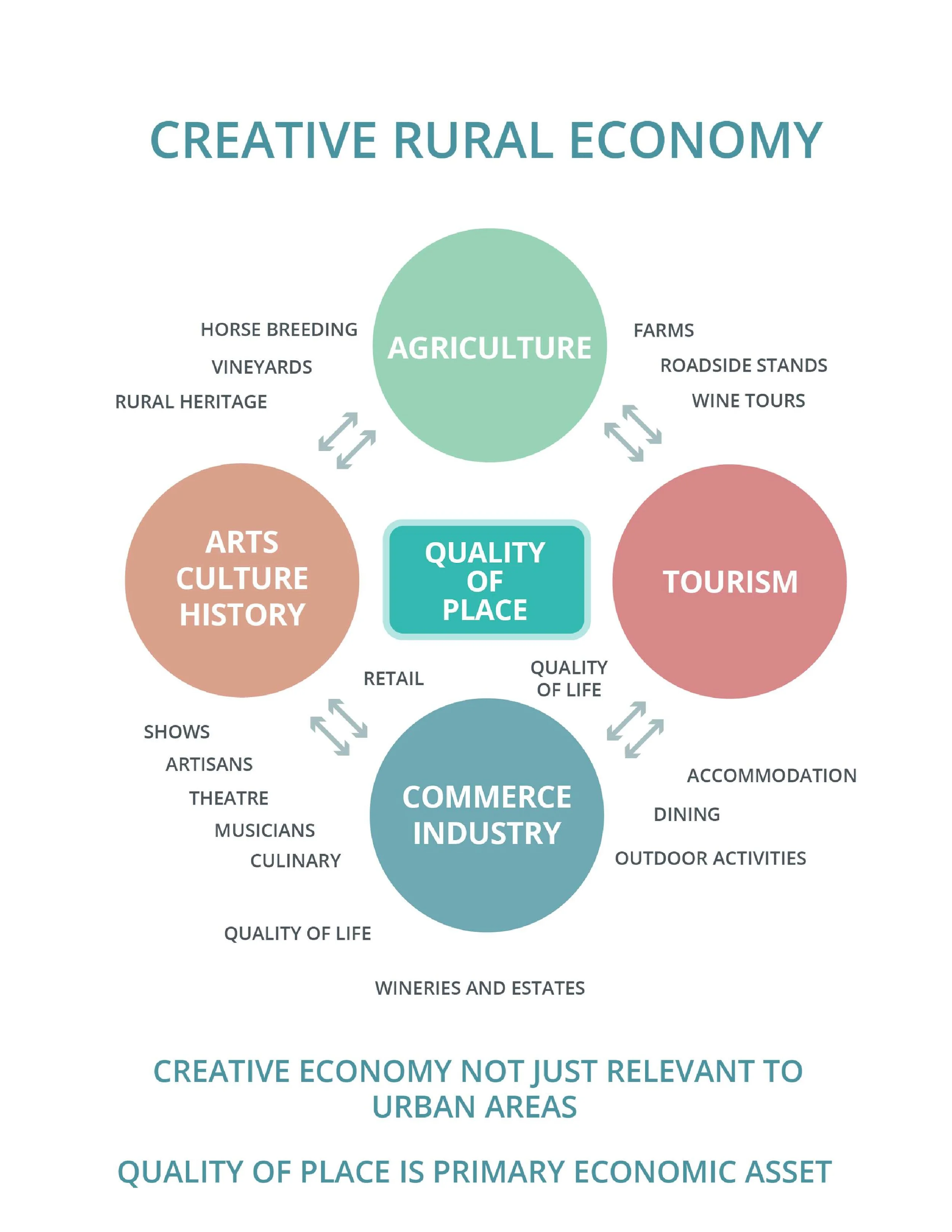
Cultural planning is relevant everywhere. In small rural towns, it can mean preserving local traditions and identity while creating new economic opportunities. In large global cities, it can help us understand and communicate place identity that shape the world’s perception of cities; it can be a source of soft power for cities and nations; it can support culture and creative industries and ensure that rapid development doesn’t erase the authentic identities that made cities vibrant in the first place.
Cultural planning also invites us to acknowledge and better reflect the profound ethno-cultural and racial identities of Canadians. Our cultural and media infrastructure in Canada fails to reflect our racial diversity; specifically, our Indigenous, Black and racialized communities. Canada – like most Western democracies – is dangerously ‘white and middle class’ in a country of staggering racial diversity and rising income inequality. We must do better.
Culture is a powerful force for positive change in the world.
Want to learn more?
Explore our bespoke infographics