
My Teachers
Colin Mercer
Cultural Resources and Cultural Mapping
When Colin died far too soon in 2013, The Guardian called Colin Mercer “one of the most influential figures in cultural policy research over the past 25 years”. Although his legacy reaches much further back, I first encountered him through his 1996 book The Cultural Planning Handbook: An Essential Australian Guide. Although cultural planning understood as the place of culture in city building can be traced to ancient times, in its modern form had emerged in the 1970s in the United States.
Colin’s work built on these origins but brought forward two ideas that I thought were revolutionary. The first was the idea of cultural resources. This was an unapologetic embrace of culture as a resource or an asset not only for economic but for social, civic as well as other “public good” benefits. Then he said stop thinking about culture in the categories defined by government and funding agencies (as in arts, heritage, creative industries) and instead ask the more democratic question “what do communities value and consider cultural resources?”. These resources or assets were both tangible (‘things’) and intangible (‘stories’).
Cultural mapping was the methodology he described to identify and spatially map these resources to inform city planning and to increase awareness and access to these activities and experiences. Colin saw cultural resources and cultural mapping as a subversive strategy to free culture from its capture by ‘metropolitan elites’. He believed cultural resources and cultural mapping were tools for ‘cultural citizenship’ in two contexts. The first was challenging understandings of citizenship outside homogeneous nation states. The second was ‘citizenship as agency’ underpinning our collective commitment and shared purpose in society.
I am extremely proud that he contributed two chapters in my book Rediscovering the Wealth of Places: A Municipal Cultural Planning Handbook for Canadian Communities published in 2010.
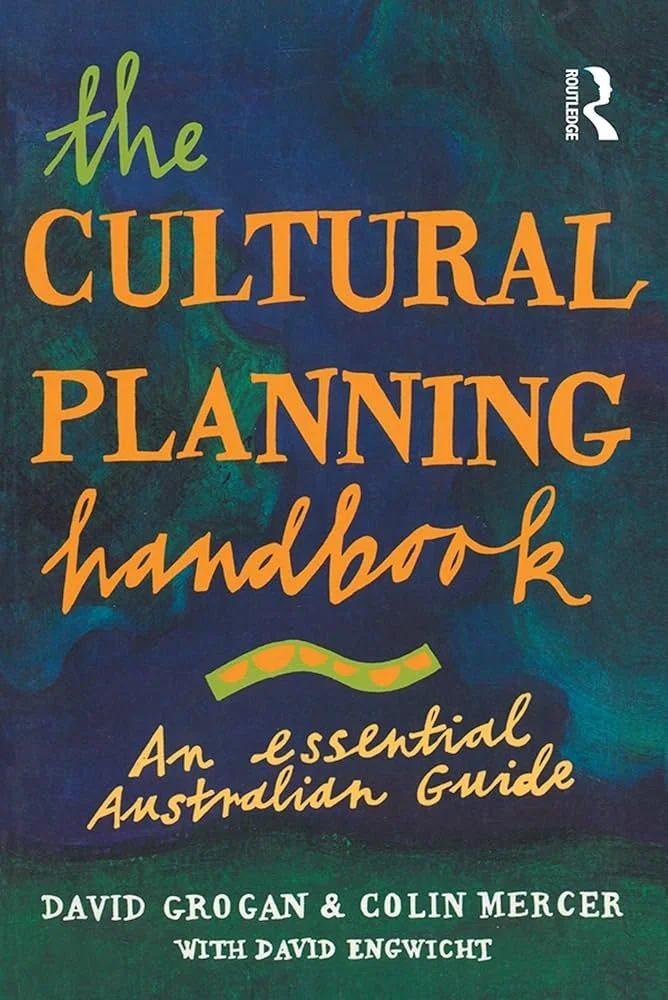
The Cultural Planning Handbook (1995) by David Grogan & Colin Mercer

Featured in The Guardian obituary 2013
Vincent Tovel
“We need a Canada Council for Heritage to parallel the Canada Council for the Arts”
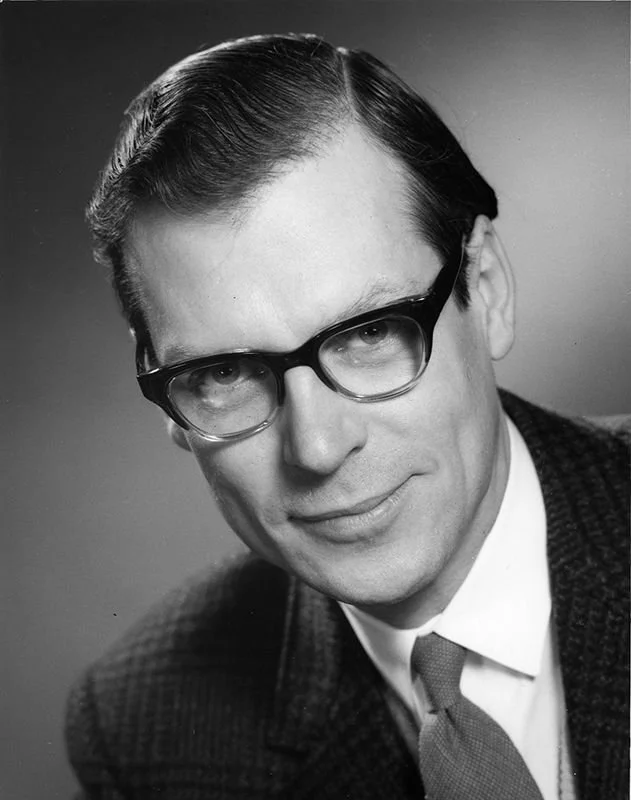
Vincent who died in 2014 was a legendary CBC producer and director and a dear friend for close to 30 years and the most widely read person I’ve ever met. He was a Rosedale Red Tory whose uncle was Vincent Massey, our first Canadian-born Governor General, but related through his mother to George Grant, author of Lament for a Nation, the 1960s polemic in what Grant foresaw our inevitable integration with the American Empire; a timely topic today. Grant argued if we cannot remember our past and culture – understood not as the arts but as the depth of human experience over time – we would fall victim to instrumental reason and the ‘will to power’ of the United States.
Vincent was a long-time board member of the Canadian Conference for the Arts but wrote a submission to the Federal Government proposing establishing a Canada Council for Heritage to parallel the Canada Council for the Arts. The failure to act on this recommendation left out a critical dimension of cultural policy in Canada. Canada has cultural polices and sectoral strategies, but we have no cultural policy unlike mature countries such as Australia who adopted its first cultural policy entitled Creative Nation first adopted in 1994 and updated regularly since.
He influenced my thinking but also shaped some of the work I’ve been privileged to do. I was a member of a team that established the Ontario Heritage Policy in 1990. This was a ‘whole of government’ policy framework applicable across all provincial Ministries. David Silcox, the longest serving Deputy Minister of Culture in Ontario (and I believe in Canada) called it “the most consequential achievement of my tenure as Deputy Minister”. This from a legendary arts leader and author of a definitive biography of David Milne.
CBC Still Photo Collection/Robert Ragsdale
Carol Tator
Diversity and “Democratic Racism”
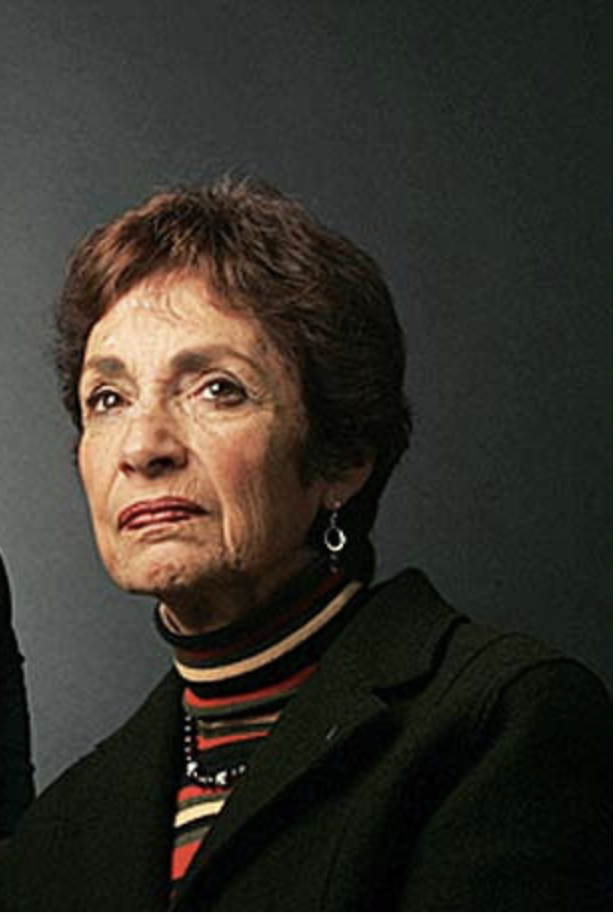
Carol Tator is a leader in the field of diversity and anti-racism as an academic and consultant. She developed and implemented policies to dismantle systemic racism in Canadian institutions, including the media, the police, the education system and the arts. After a lifelong career seeking to address racism though policy and advocacy, she conclude the only effective tool for confronting the systemic issue was integrating an understanding of powerful if unconscious racial hierarchies (as in ‘lesser than intelligence’, ‘lesser than cultural sophistication’ and - in the crime against humanity - ‘lives worth less than’) was integrating an awareness of hidden values in the curriculum of all professional schools.
Together with Frances Henry and Winston Matthis she authored a series of studies of racism in the 1990s. In 1999 they published Challenging Racism in the Arts in Canada. Case Studies in Controversy and Conflict a series of case studies in which racial minorities pushed back on the failure of cultural institutions to reflect the demographics of their ‘host’ societies. A core concept in their work was “democratic racism”. Britain could not ignore its Empire, and the United States could not ignore slavery, but Canadians could hide behind a soft liberal discourse of “diversity, immigration and multiculturalism” which acted to obscure rather than reveal structural racism in Canadian society.
Canada’s public sphere – our public institutions and media – do not reflect the staggering racial diversity of Canadian society. An anecdote illustrates our challenge. Sunfest is one of the largest global music and culture festivals in my hometown of London, Ontario. Evidently a member of city Council – inevitably white, male and middle class – came to the festival and asked, ‘where did these people come from?’. Well, they were always there but shielded by a lens of white privilege. Canada can and must do better.
Leslie Oliver
Cultural Knowledge and the Power of Curriculum
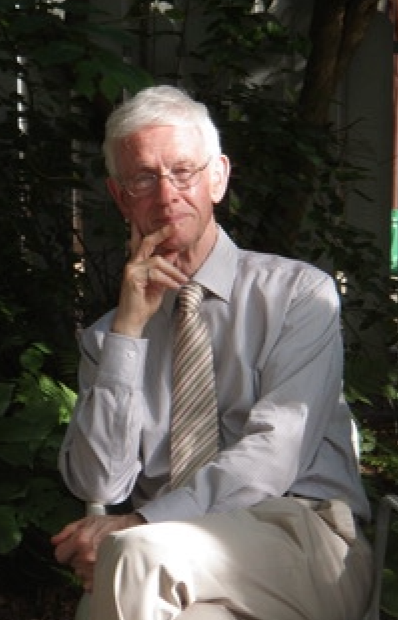
I first encountered Leslie G. Oliver in 1988 during my involvement as a team member with the Ontario Heritage Policy Review (OHPR). We had written a discussion paper for the Revie that was intended to ‘lift the discussion up’ and encourage people in the province to think more deeply about what heritage was and why it mattered. At 26 Town Hall meetings across the province people seemed unable to respond to the paper as we had hoped and focused on minor technical details related to legislation and policy. At a meeting in Aurora, Ontario someone finally spoke to the issues in a deep and profound way.
Leslie had been the founder of both the Aurora Arts Council and the Aurora Historical Society – one of the very few people I had encountered in my career to speak to both arts and heritage. His lifelong passion has been the study of material culture which refers to the physical objects, resources, and spaces that people use to define, construct, and interact with their social world.
Leslie was also a senior administrator with the Ministry of Education in Ontario whose PhD had been in the content, structure, acquisition, and dissemination of personal and professional knowledge. He taught me about curriculum and the requirement for any field of work claiming professional status to have a curriculum that addresses ‘an integrated body of theory and practice’. This sounds easy but in fact is extraordinarily difficult. In culture we’re very good at the theorizing of culture at a very high level but less good at connecting those ideas to a body of tools and levers. Carol Tator’s conclusion that curriculum was the key to addressing diversity and anti-racism was reinforced by Leslie’s understanding of the actual structure and form of curriculum.