Creative Vitality in Detroit: The Detroit Cultural Mapping Project (2012)

This project, undertaken in 2012 by The Kresge Foundation, formed part of a broader effort to advance new approaches to urban development through arts, culture, and social equity. As one of the United States’ leading philanthropic institutions, Kresge brought a strong track record in supporting initiatives that link cultural investment with community revitalization, and this study sought to deepen understanding of how cultural resources function within that ecosystem.

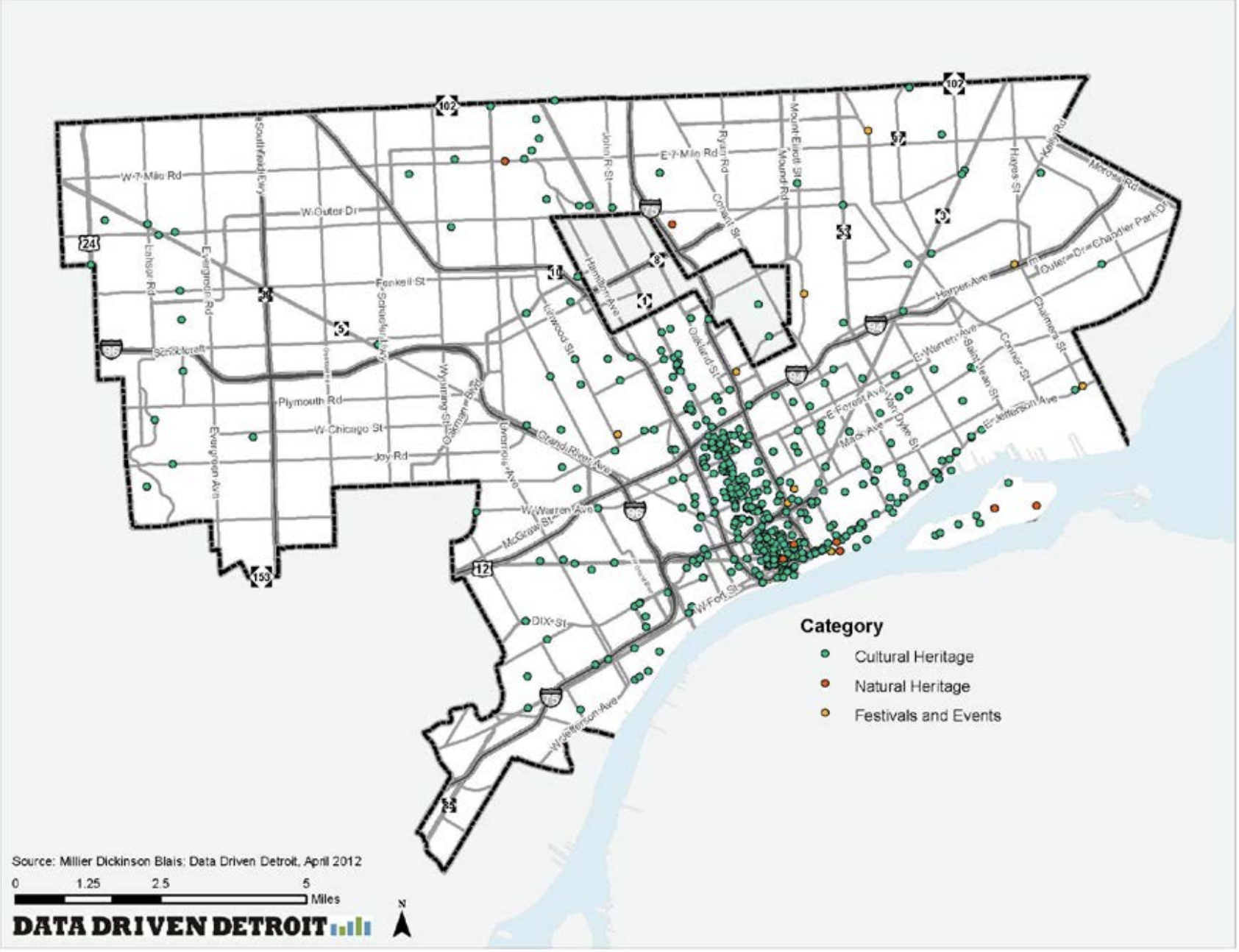
At its core was a clear premise: that the value of arts and creativity is most powerfully realized when integrated into a wide spectrum of community improvement and revitalization strategies. Rather than treating culture as a standalone sector, the project framed it as a cross-cutting force—embedded in economic development, social cohesion, and place-based planning. Cultural mapping was central to this approach, defined as a systematic method for identifying, documenting, and analyzing a community’s cultural resources. Through this process, the project identified and spatially mapped a wide range of tangible cultural assets across the city, establishing a robust evidence base for future planning.

More broadly, the initiative reflected a growing recognition among policymakers and practitioners that cultural resources are essential to both economic development and community well-being. This shift required new tools, frameworks, and assumptions—moving beyond traditional planning models to better integrate cultural assets into decision-making processes. Alongside its quantitative mapping work, the project also surfaced powerful local narratives that spoke to the city’s identity. In one striking example, a network of “micro-assets” was identified around an African American barbershop in a highly disinvested neighbourhood, illustrating how cultural value often resides in informal, community-embedded spaces.

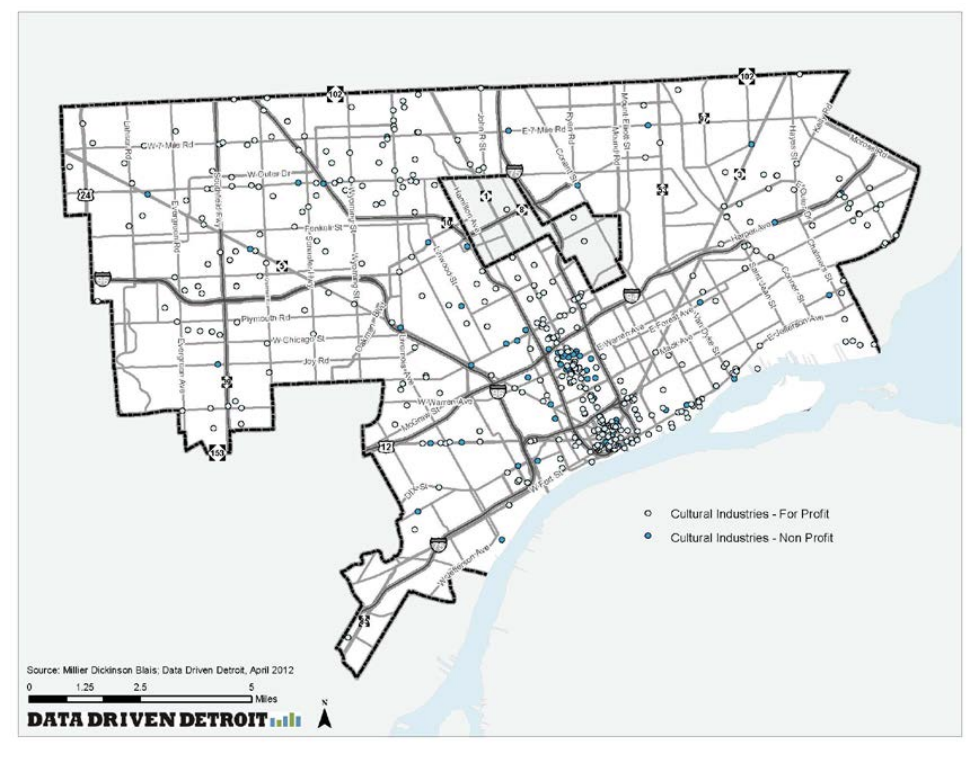
The study also articulated how cultural mapping could support Kresge’s National Arts and Culture Program across five key dimensions: building supportive infrastructure to enable networks, partnerships, and collaboration; fostering cross-disciplinary connections by improving access to information; bridging the divide between non-profit and commercial cultural activity; strengthening linkages across the cultural value chain—from creation through to participation; and informing planning and community development agendas through a richer cultural knowledge base.

These insights were closely aligned with the evolving field of creative placemaking, understood here as an integrated and multidisciplinary approach to connecting cultural resources in order to build authentic places—neighbourhoods and districts that reflect shared identity, foster civic engagement, and support inclusive growth. From a planning perspective, this positioned cultural resources as central to the enhancement of the public realm: the parks, streetscapes, open spaces, and transit corridors that structure everyday urban life. Within these spaces, culture is expressed through design, heritage conservation, and opportunities for social interaction and exchange, with public art—both commissioned and community-led—playing a particularly visible role.

Ultimately, the project demonstrated that cultural mapping is not simply a documentation exercise, but a strategic tool—capable of informing policy, strengthening communities, and embedding culture within the broader frameworks that shape cities.

The full report can be viewed here.